Read It
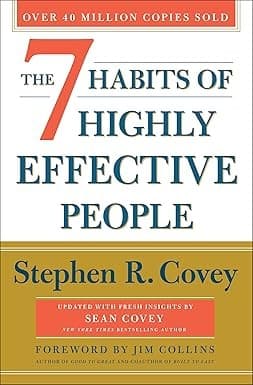
Covey asks a question that most productivity books avoid: what if the problem isn't your technique, but the person using it? His answer is that lasting effectiveness can't be manufactured through image, clever scripts, or quick fixes. It has to grow from character and principle, working from the inside out. The book builds a deliberate architecture: private victories of self-mastery—proactivity, vision, and disciplined prioritization—must come before public victories of trust and collaboration. Only then can win-win thinking, empathic understanding, and synergy actually hold. The habits aren't isolated tips; they form an interdependent sequence where each stage depends on the maturity achieved in the one before it. What makes this book different is its refusal to treat personal and relational problems as surface issues. It reframes them as symptoms of underlying paradigms and character. That makes it less a productivity system and more a philosophy of maturation—one that asks how you see yourself, others, and the world before it asks what you should do next.
 Open full InkMap ↗
Draw It
I see the seven habits as three nested systems. The inner layer is personal choice: be proactive, begin with the end in mind, put first things first. These move a person from being pushed by circumstances to managing themselves. The middle layer is relationship: think win-win, seek first to understand, synergize. These let an independent person work with difference instead of against it. The outer layer is renewal, which feeds energy back into the first two. What runs through all three isn't efficiency—it's paradigm. The lens you use to define a problem determines what actions you'll even consider.
Take It With You
Technique can make one conversation go more smoothly, but character and principle decide whether a relationship survives time. The seven habits aren't really about managing your life more tightly. They're about taking responsibility for it in stages: from choice, to direction, to relationship, to renewal. That's a slower path than most quick-fix advice promises, but it's the only one that doesn't collapse under pressure.
CHAPTER BY CHAPTER