STORY 03
A Doubles Life: Twenty Years of Love, Struggle, and Unspoken Understanding
 虎头锤 (Hutouchui) · Staff Engineer
Translated from the original Chinese essay · Read the Chinese original →
This is the third piece in Wandering Under Different Stars (3/100).
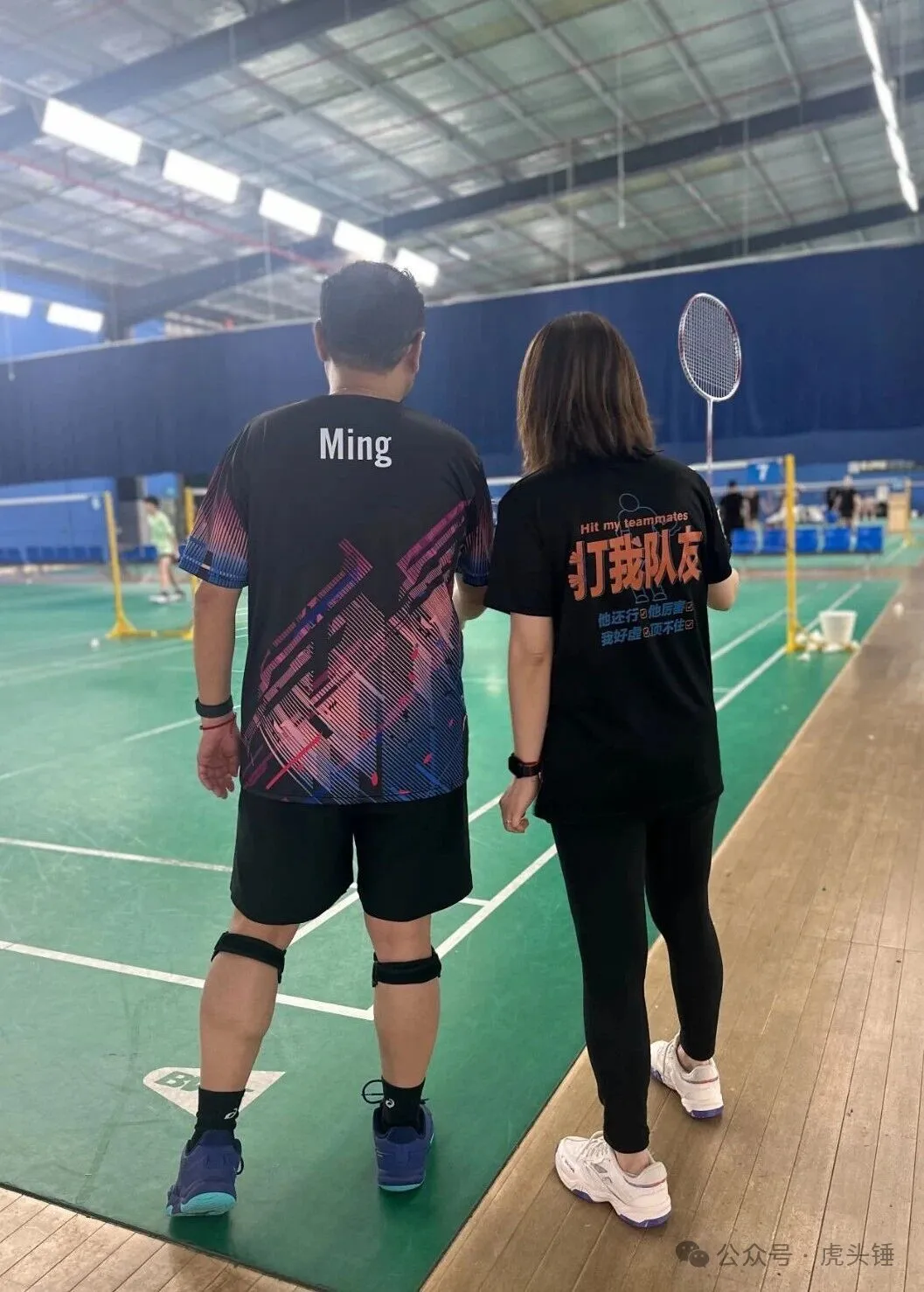
On the badminton court, and in my circle of friends, there is one pair that stands out to me: Ming and his wife, Ming Sao.
Their story has no overnight success, no effortless good luck. It is built on trial after trial, repair after repair, and a steady stream of mutual support.
Act One: Survival
Ming is a Malaysian Chinese.
After all, for people who command Chinese, English, Malay, Cantonese, and Mandarin (someone like me, with no gift for languages, would probably not survive a single episode in Malaysia 😄), coming to Australia to study was a natural choice.
He started working part-time while still in school. Washing dishes in restaurants was routine; during peak hours at a buffet, he would wash thousands of plates a day. These jobs did not stop him from graduating, but they did, more or less, affect his job search.
Before graduation, he interviewed at Intel (at the time, Intel Malaysia was hiring graduates in his field), but he did not make it.
He graduated in 2002, still washing dishes. Later, through a friend's introduction, he went to work for a computer hardware company. Besides weekdays, he spent weekends setting up stalls at swap-meet computer markets run by different councils. Piles of computer parts were stacked together—hard drives, graphics cards, cases, memory, CDs, everything you could imagine. That was a mark of an era, now long gone.
The real turning point came from a chance opportunity. He built a website for the boss he worked for, pieced together with PHP. The work was crude, but it ran and it worked. It did not even have SSL, yet it dared to let users pay by credit card 😄.
That piece of work gave him something to show in an interview for the first time, and it got him into the IT industry.
And that starting point soon met its trial.
During one development task, he wrote 10,000 instead of 100 for an amount, causing users to be overcharged. Two extra zeros did not crash the system, but the phone calls kept coming in, and the complaints and questions made the air tense.
As a newcomer to the field, he panicked inside, even thinking he would have to pay for the losses out of his own pocket. His palms sweated, and the keyboard almost slipped under his fingers. Still, he had to fix the bug, deploy the fix, and roll back the charges. When he walked out of the company, his clothes were completely soaked with sweat.
So a programmer's professional dignity is not about writing beautiful code, but about having the courage to stand firm when things go wrong.
Ming Sao is a humanities graduate.
Her first job in China was related to overseas logistics. She knew the business well, but it had nothing to do with IT. Later, by chance, because she understood the business, she entered a large company and began learning QA. At first, her use cases were excellent, but because she had no technical background, her test cases were utterly baffling. Still, being in a major international company, she was exposed to all kinds of advanced processes and tools.
After coming to Australia, the Level 3 English course at TAFE was simply too easy. She applied for logistics-related jobs with the mindset of practicing English, and quickly hit a wall. Without local experience, she faced many closed doors.
It was her QA experience that helped her, especially the processes and methodologies trained in a large company, which made her stand out when she entered an Australian company. That was how she landed her first IT job.
From that job, and then through two years at a consulting firm, she kept switching between projects: QA, IC, Lead, and sometimes filling in as BA or PM. It was exhausting, but it forced her to grow quickly.
Those days taught them to survive first, and then to keep moving forward.
Act Two: Choices
As cloud computing gradually emerged, Ming switched to DevOps (PHP is still the best language 😄).
His years at the car company were his true turning point.
When he first started DevOps, the first task assigned to him was to set up VPC peering. At that time, he had not even fully understood what a VPC was. Halfway through the configuration, he realized a key setting was missing, and he had to brace himself and ask a senior colleague. That moment was awkward, but there was no choice; he had to admit it.
Back at his desk, he picked up a pen and drew arrows and circles all over a piece of paper, sorting out the entire flow from start to finish, afraid of falling into the same pit again.
Because of his development experience, he wrote a tool called DashOps, which allowed complex cloud resources to be traced with a single command. Others had to dig through piles of documentation to check configurations; he could pull everything up with one command. That tool was used for many years. Ten years later, he still heard of people using it in the company.
In those years, cloud technology changed fast and opportunities were abundant. With his willingness to dig deep and his ability to carry the load, Ming truly put down roots in Australia's IT circle. It was during that time that I first met Ming, and then Ming Sao.
But Ming did not want to stop at writing tools and being an IC (Individual Contributor).
His goal was clear: he wanted to move toward Engineering Manager. He preferred working with people and wanted greater influence.
So he started by leading a small team, gradually moved up to EM, and then to managing managers as an EM. Being an EM means pulling yourself away from code and actual implementation, and letting others run. Being a Manager of Managers is even harder; you have to wrestle with the company's resources and constraints. It was completely different from the code world he knew, and he often felt a weariness of searching for answers in the cracks, but he also enjoyed it.
This was a choice, not being pushed along. He was frank about it: since he was here, he wanted to move up.
Ming Sao's path was different.
She spent ten years at Equifax, moving from QA to Lead, from managing projects to leading teams, step by step. When she was finally up for promotion to EM, she was told her salary would be five thousand less than someone hired from outside. Her manager even said, "You are the best of the three, but because it's an internal promotion, the salary is five thousand less."
The resentment was real, but in the end she accepted it; after all, reality is harsh. That five thousand dollars remained a thorn in her heart.
Six months later, she went to Afterpay.
She had originally interviewed for an EM role, but the interviewer thought her skill set was unique and simply created a new position for her: TPM (Technical Program Manager). That day, she went through six rounds of interviews in a row and finally got the offer. At last, she could bid a satisfying farewell to the former company that had begrudged her five thousand dollars.
Last year, the company had layoffs, and her entire TPM group was dissolved. Just before a promotion, she was forced to leave.
What truly made her doubt herself was at Canva. Before that, she had already been an EM at Equifax and had led teams at Afterpay; most of her interviews had gone smoothly.
Canva is a well-known big company, and since Ming Sao was interviewing for a role one level lower, she had to be determined to succeed. But after reaching the final round (eight weeks had passed), the feedback she received was: communication was not good enough, not what they were looking for.
At that moment, time seemed to stand still.
It was not that she had never been rejected, but it was the first time she was hit on the point of "communication." Years of accumulated experience seemed suddenly negated.
Life had to go on. If she could not figure it out, she would hire a coach; if she had not done well enough, she could always start over.
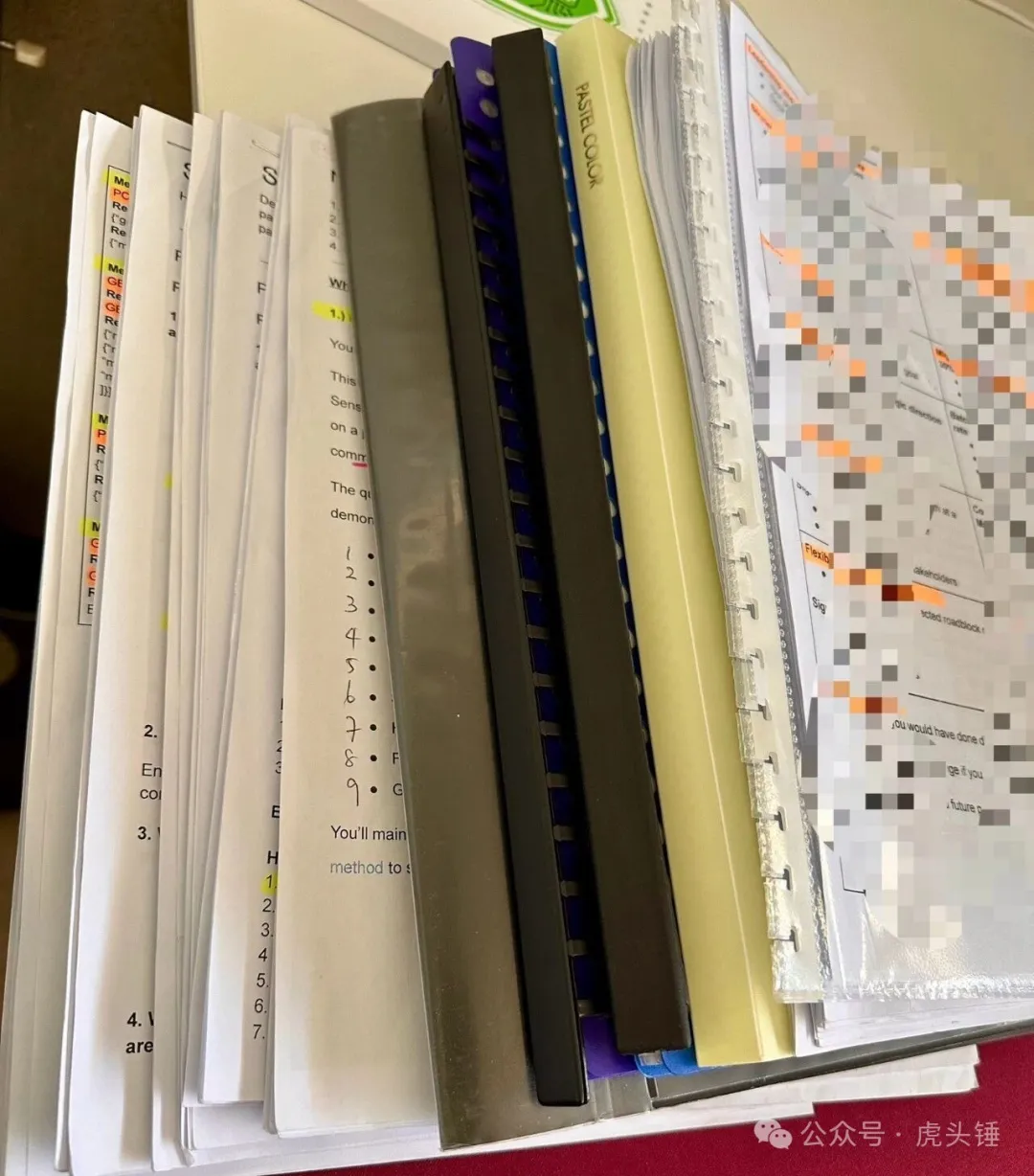
She shut herself at her desk, with a thick stack of printed interview stories beside her, each revised five or six times. Every page was covered in highlighter marks—bright green, orange, pink. She kept tearing them down and rewriting them, until the stories had both logic and power.
Those papers were her resilience.
And she was not only doing it to pass interviews. Each time, she went in with a mindset of talking more and learning more: even if she did not get the offer, having a conversation with someone was a gain. When interviewing at her current company, she even thought: chatting with the CTO would surely teach her something.
She is not afraid of failure; she is afraid of standing still and not learning.
Later, she mentioned a quote that particularly moved her:
"You can't connect the dots looking forward; you can only connect them looking backwards. So you have to trust that the dots will somehow connect in your future." — Steve Jobs
When you are moving forward, these dots are isolated, with no apparent connection to each other; only when you look back do you realize they have long been secretly forming a line. All you can do is trust that at some point in the future, these dots will converge into the trajectory of your life. — Steve Jobs
For her, every rejection, every project change, every failure seemed like meaningless fragments at the time, but looking back today, they really have connected into a path.
And not long after Ming joined Xero, Ming Sao also welcomed a turning point: a satisfying offer finally arrived. This was the latest dot to be connected.
Act Three: Complementarity
Ming Sao is gradually being seen.
Recently, her company recommended her to participate in a panel discussion at Her Tech Circle.

On stage, other C-level women mostly talked about strategy and vision, but she spoke very concretely: how to break complex projects into small pieces, how to use clear communication and structured methods to solve problems one by one in collaboration across more than twenty teams and time zones. She said that true leadership is not about having the loudest voice, but about bringing people together, clarifying priorities, and making every step transparent and visible. The audience nodded frequently.
In a Lightning Talk, she took a lighter approach, comparing her career to "leveling up by fighting monsters." From QA to management, she stepped into pits all along the way, and grew all along the way. She had been anxious and doubtful. But on second thought, those pits later became stories, and even sparked conversations in interviews that led to offers. She said the workplace is not a zero-sum game; surround yourself with optimistic people, and even if there is no result in the end, you can still gain something.

Ming has his own distinctiveness.
Once, in a video meeting, he was surprised to find that he was the only person of color among the participants; everyone else was white. He said bluntly, "As a first-generation immigrant with yellow skin, it is extremely difficult to climb several levels, unless you meet a benefactor; otherwise, relying on ability alone is basically impossible." This is not a complaint, but a clear-eyed observation.
At home, he also has his own bottom line.
"I only lose my temper with the kids, not with her." That sentence is a boundary.
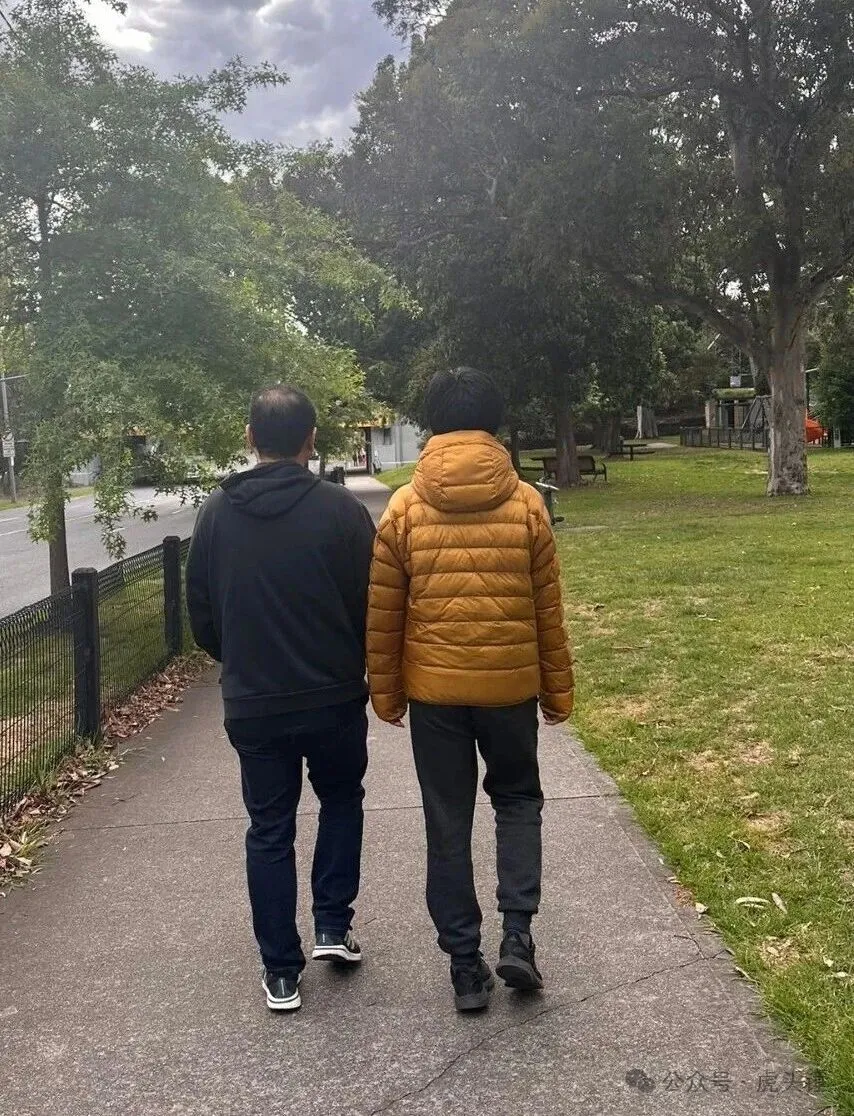
But some things, even with boundaries set, still weigh on his heart. Their eldest, Logan, is 14 years old now. He was sent to full-day childcare at nine months, and to this day Ming feels guilty about it.
The 14-year-old boy is already taller than Ming.
During the job-hunting period, they also formed a peculiar complementarity.
Ming Sao failed to get offers from several companies in a row and was very anxious. Ming consoled her: "It's really not that hard. Let me show you." So he started looking for a new job himself, and quickly got an opportunity at Xero (I admit, this scene was a bit heartbreaking 😄). But it also proved Ming's point: sometimes, don't overcomplicate the problem; just try first.
They are different, yet they always fit together. One carves traces into systems, the other writes repairs on paper; one competes openly, the other refuses with clear eyes. They are husband and wife, but even more, they are partners. Even in multilingual ability, Ming Sao has never lost.
Ming often says, "Everything is the best arrangement."
The most recent example is that Xero has no RTO (Return to Office) policy. So Ming Sao can go back to the office whenever she wants, and errands like picking up the kids fall to him, which he enjoys.
I play badminton with them every week. Watching them chat and laugh on the sidelines, I suddenly understood the word "complementarity."
The trivialities of life and the choices of the workplace are all interwoven in this rally—one blocks, one drives; one attacks, one defends.

Epilogue
On the badminton court at night, the lights shine on the floor, and the sound of rackets hitting shuttlecocks mingles with the laughter of children. Being able to partner with Ming Sao and occasionally beat Ming is enough for me to brag about for two or three months.
Watching them coordinate on the court, I always think of these years. From drifting to putting down roots, from doubt to persistence, from individuals to complementarity. It is like a doubles match: someone taps lightly at the net, someone smashes hard from the backcourt; someone steadies the rhythm, someone takes the risks.
A doubles match fought side by side.